

Pluriversal Laboratories
Welcome to the SIT-PLU Labs overview, featuring detailed presentations of the three core labs collaborating within the SIT-PLU project. Each lab uniquely interprets and engages with the concept of the Pluriverse through artistic research, ecological practices, and community engagement.
Read more about the SIT-PLU Labs Kick-off Events:
LAB EINA (Barcelona)
Focused on the urban-peri-urban transition at Collserola Mountain, the project explores the synergy between the natural park and the EINA campus through regenerative design.
Institution: EINA - University Center for Design and Art of Barcelona (attached to UAB)
Community group: Dr. Anna Pujades, Mar Saez, Dr. Rafael de Balanzo, Dr. Tania Costa, Dr. Lara García-Diaz, María García Ruiz, Dr. Pilar Cortada
Lead Team Members: Dr. Lara García-Diaz & Dr. Tania Costa (senior researchers), Mar Saez (junior researcher)
Engaging the Pluriverse: SIT-PLU LAB EINA is a research laboratory embedded in a peri-urban territory: a transitional, azonal space between the city of Barcelona and the Collserola Natural Park. This liminal landscape is shaped by stratified complexities where diverse materialities, life forms, and temporalities intersect in hybrid, often ambiguous ways. It is a space that resists fixed categorisation, continuously co-composed by human and more-than-human agents.
At the core of the lab’s approach is a commitment to engage with this environment by directing attention downward, to the soil, as both a physical and conceptual starting point. Soil is understood not only as a substrate, but as a living, interpretative layer: a carrier of memory, contamination, hidden life, and potential regeneration. It functions as a material archive through which the entangled temporalities of deep pasts, immediate presents, and emergent futures can be critically apprehended, revealing the complex processes involved in the production of ground making and inhabitation of place.
Through this lens, SIT-PLU LAB focuses on this interstitial zone, engaging in sustained analysis and dialogue with the soil and subsurface as the foundational ground sustaining both realities. It aims to reveal the often-invisible forces shaping peri-urban or what the lab approaches as complex in-between ecologies.
Purpose and Intentions: SIT-PLU LAB is committed to developing situated and plural methodologies that interweave creative practices with interdisciplinary research to explore new ways of sensing, inhabiting, and thinking with peri-urban territories. At the core of the lab’s approach is a strong emphasis on methodological experimentation—particularly with diffractive, multi-stratified and resilience approaches—as a means to trace, interpret, and respond to the complex entanglements of these liminal landscapes.
Much like analysing a soil profile, these methodologies seek to uncover and navigate the stratified horizons of the territory where EINA is situated and with which it co-exists. The aim is precisely to generate proposals from, through, and in conjunction with both the university’s infrastructure and the territory it inhabits, reconfiguring our relationship to place while grounding concrete actions in re-wilding and more-than-human regeneration. By cultivating modes of inhabitation that are attentive, restorative, caring and ecologically entangled, the lab positions itself within—and in active relation to—EINA’s infrastructure and its peri-urban surroundings.
Core Questions:
How can we develop and apply situated and diffractive methodologies that allow us to engage with the invisible, layered, and spectral ecologies of peri-urban territories?
In what ways can soil—understood not only as physical substrate but as a living, interpretive category—serve as a lens for rethinking our modes of inhabiting, sensing, and coexisting in transitional landscapes?
How might situated creative practices and interdisciplinary research contribute to forms of repair, care, and regeneration that respond to the material, ecological, and socio-political entanglements of peri-urban environments?
Pluriversity of Methods: Analogous to the analytical reading of a soil profile, the laboratory is grounded in the cultivation of a pluriversal ecosystem: an epistemic and pedagogical space fostered through public lectures and transdisciplinary workshops that convene researchers, students, designers, artists, local communities, and more-than-human agents. These encounters promote intersections between education, research, and public engagement, pushing the boundaries of conventional academic practice.
The methodologies that the laboratory seeks to explore, refine, and systematize, are also embedded within undergraduate and graduate pedagogical frameworks. Students engage in situated, experiential learning through practices such as collective mapping, situated walking, project archaeology, and hands-on territorial investigations involving drawing and model-making. These techniques enable a critical, multilayered reading of the peri-urban landscape, inviting participants to engage with its social, ecological, and ontological entanglements in situated and transformative ways.
Collaborators and Target Groups:
Graduate and undergraduate students
Local communities
Ecological and environmental non-human agents
Political and governmental actors


LUCA Lab (Ghent)
Situated at Park/Castle Ter Beken, this lab challenges anthropocentric narratives through inclusive, multi-species storytelling and community collaboration.
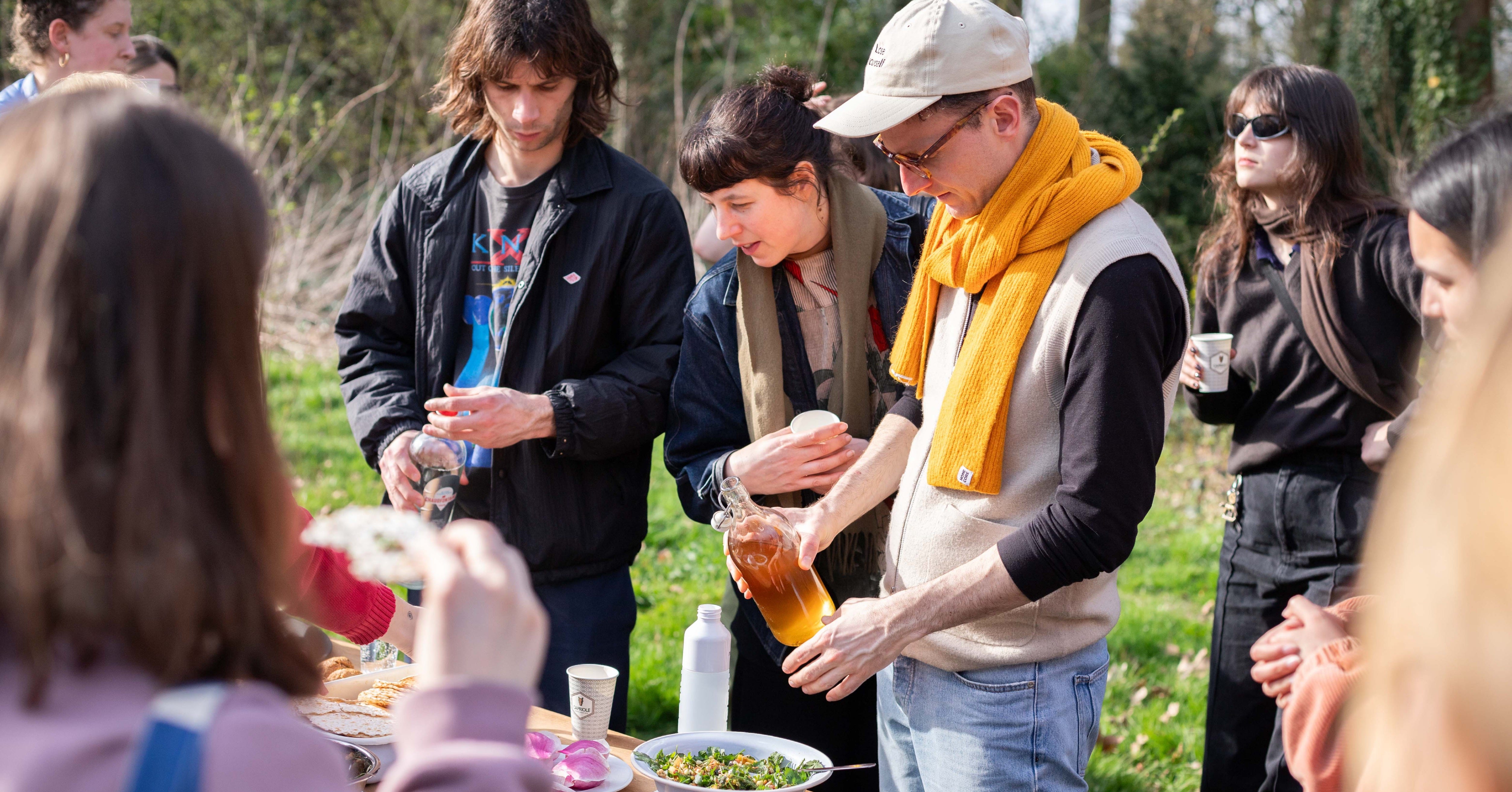
Institution: LUCA Arts School
Research group: Fluid Futures
Community group: Common TerreAnnelotte Lammertse (dye garden, PhD research LUCA)
Lead Team Members: Anja Veirman (senior), Lara Bongard (junior)
Instagram: @luca.schoolofarts, luca.research
Engaging the Pluriverse: The Lab embodies the Pluriverse as a lived practice rooted in the layered grounds of Ter Beken. It embraces multiple ways of knowing—human and more-than-human, local and diasporic—through relational, land-based practices. Seasonal gatherings, co-creation with farmers and neighbours, and multisensory research foster dialogue between beings, stories, and temporalities. The lab challenges dominant narratives, adopting a regenerative and intersectional approach that honours complexity and co-existence.
Purpose and Intentions:The lab aims to challenge human-centered narratives and foster regenerative relationships to place through artistic research and ecological practices. By working with land rhythms, embodied knowledge, and community collaboration, it supports a shift from extraction to relation and from fixed heritage to living memory. It provokes critical reflection on colonial legacies and ecological responsibility to cultivate plural narratives of belonging.
Core Questions:
How can storytelling, seasonal rituals & multisensory methods support regenerative relationships to place?
How can plural narratives coexist and inform each other?
How do we learn from the land’s entangled histories?
What practices foster deep reciprocity across species and time?
Pluriversity of Methods: Immersive, site-specific learning engages students via workshops, fieldwork, and reflective practices. Local communities participate in collaborative dinners and storytelling rituals. Non-human agents such as plants and soil are engaged through sensory mapping and biodynamic rhythms. Dialogues with political actors support inclusive heritage and ecological restoration, emphasizing iterative, intersectional, and place-based methods.
Collaborators and Target Groups:
Local farmers and neighbours
Artists, researchers, students
Educational institutions and grassroots initiatives
Communities affected by ecological or social marginalisation


Activity Reports:
21.6.2025 | Harvest of St. John’s Wort
09.10.25 & 27.10.25 | Traveling Dinner Ta(b)les I
01.11.2025 | De Oorsprong voor de Voorsprong
18.12.2025 | Entangled Dreaming
UPV Lab (Valencia)
UPV Lab redirected its efforts to documenting the impact of the October 2024 DANA floods, which severely affected the Valencian community.
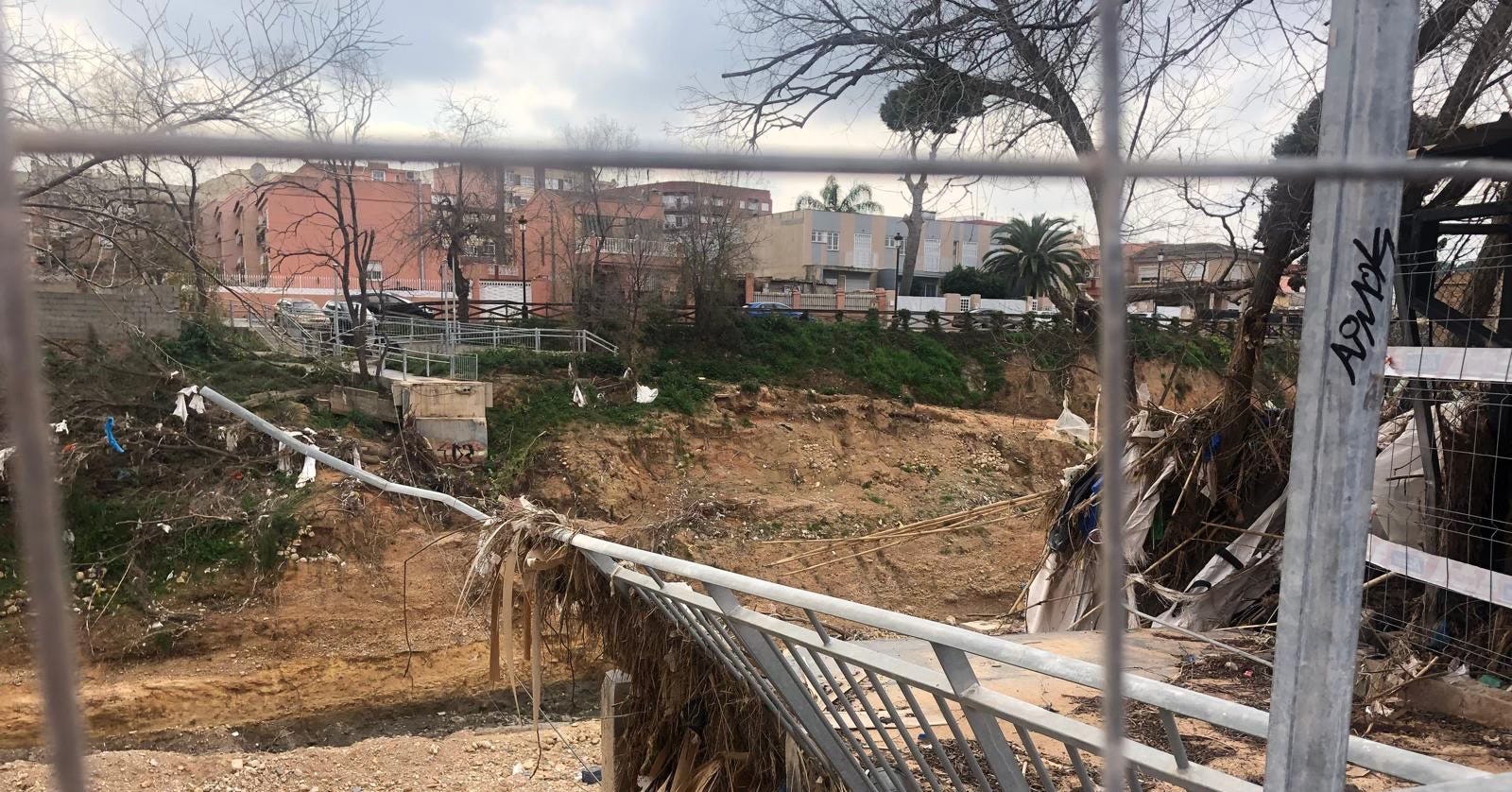
Institution: Universitat Politècnica de València
Research group: Art and Environment Research Centre (CIAE) and LABOLUZ (UPV)
Community group: Department of Painting and Department of Sculpture (UPV), Fundació Assut, Regularización Ya, CLERs, etc.
Lead Team Members: Jose Albelda Raga (senior), Lorena Rodríguez Mattalía (senior), María Vidal Soria (PhD Student), Ruth Muñoz Domènech (PhD Student)
Instagram: @mheste_deseeea
Engaging the Pluriverse: The VAL·LAB, at UPV, views the Pluriverse as a space of situated, collective imagination. Following the 2024 DANA climate disaster, it centers voices and responses from affected communities, weaving ecological wisdom, feminist eco-social thought, and artistic practices. The lab uses art as a tool for co-sensing, reparation, and political activation, fostering participatory models toward sustainable, livable urban futures.
Purpose and Intentions: The lab aims to foster ecosocial transformation through situated artistic practices. It documents and co-creates alternatives to extractive urbanism by highlighting grassroots responses to climate disaster. The goal is to shift narratives from victimhood to agency and promote inclusive, accessible, sustainable urban life. Using audiovisual essays, fieldwork, and collective engagement, it connects university, territory, and community in meaningful, horizontal ways.
Core Questions:
How can artistic practices support bottom-up, reparative responses to climate disasters?
How do we shift from urban extraction to ecosocial care?
What does a sustainable, participatory city look like from the ground up?
How can collaborative storytelling foster political awareness and action?
Pluriversity of Methods: Immersive learning processes combine fieldwork, reflection, and audiovisual co-creation. Collaborations with mutual aid groups, citizen platforms, and local residents focus on dialogical, care-based encounters. Methods include walking practices, embodied research, and ecofeminist ethics. Non-human agents shape the work. Dialogues with political actors foster alliances with citizen-led platforms, emphasizing slow, participatory, and relationally accountable methods.
Collaborators and Target Groups:
Citizen platforms like Per l’Horta, CLERs
Mutual aid kitchens and migrant justice groups
Local residents, artists, activists, students
Communities excluded from decision-making processes
University departments and research centers
Bachelor of Fine Arts and Bachelor of Design students, Master's and Ph.


